

The Most Important Smart Home Feature Isn't a Device
When people begin exploring smart home ideas, it's natural to focus on the exciting possibilities.
Lights that respond automatically. Curtains that open on schedule. Air conditioning controlled from your phone. A single panel that manages several areas of the house.
All of these can be useful.
But before choosing any of them, consider a simpler question: What would you actually like to make easier?
Perhaps your home has three storeys, and switching off the lights before bedtime means walking between floors.
Maybe your living room has tall windows, and adjusting the curtains manually is inconvenient.
Or perhaps you have elderly parents who would appreciate simple, accessible controls instead of having to navigate several mobile applications.
These are very different needs, even though they all fall under the category of smart home automation.
A well-considered system begins with understanding the household rather than choosing products first.
When Automation Becomes an Inconvenience
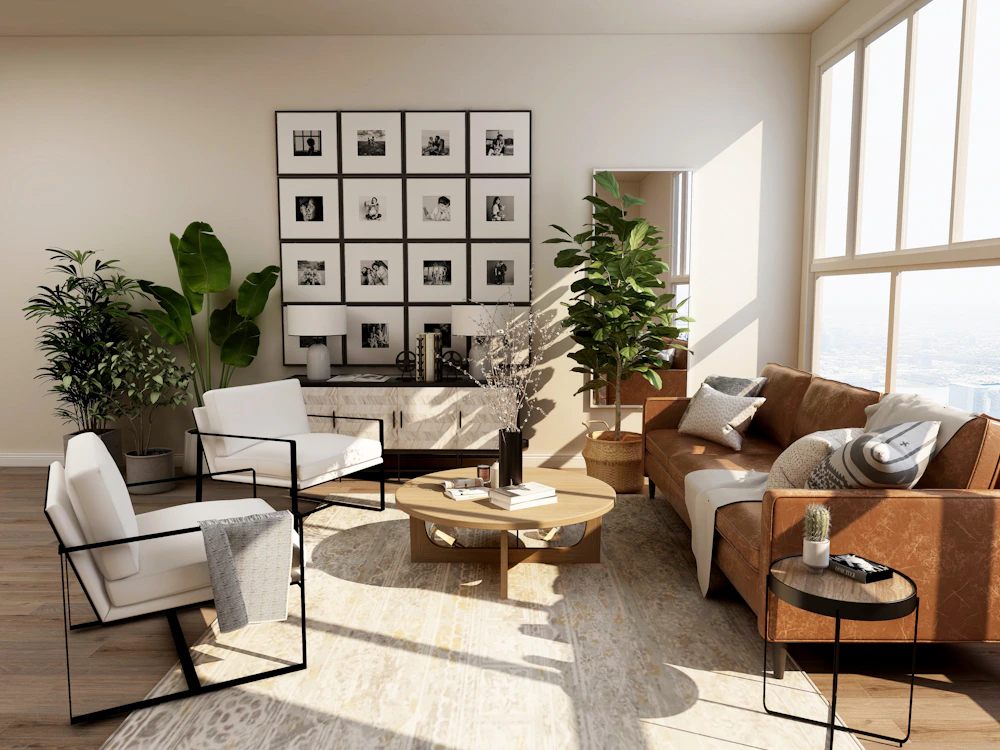
One of the biggest misconceptions about smart homes is that everything should happen automatically.
In reality, some of the most useful smart home features are the ones that give you better control without making decisions on your behalf.
Take motion sensors.
They can be excellent for certain applications, such as providing convenient lighting in selected circulation areas. But not every room or household is suited to sensor-controlled lighting.
Depending on the sensing technology and configuration, pets, moving fans or environmental activity may cause unwanted activations.
Now consider a family living in a landed house where different members leave for work or school at different times.
An automation that switches off all the lights when the front door opens might sound efficient. But what happens if someone is still upstairs?
The problem isn't necessarily the technology.
It's the assumption that everyone in the home follows the same routine.
This is why smart home planning should account for how a household actually functions.
Sometimes, a conveniently placed switch or an easy-to-use control panel provides a better experience than an elaborate automation.
The smartest choice isn't always the most automated one.
A Smart Home Should Work for Everyone in the Family
A landed home is often shared by people with different ages, routines and levels of comfort with technology.
What feels intuitive to one person may be confusing to another.
For instance, someone who enjoys controlling everything through a smartphone might appreciate detailed app-based features.
An elderly family member, however, may prefer a clearly labelled physical switch or a straightforward wall-mounted control panel.
The size, placement and simplicity of these controls can make a meaningful difference.
For households with elderly occupants, compatible emergency assistance buttons may also be worth considering.
Depending on the system, these buttons can be configured to alert designated family members when assistance is needed.
They aren't substitutes for emergency services or guaranteed medical-alert systems, but they may provide an additional way for someone to request help.
Families with young children have different considerations.
Smart door locks, for example, should be selected with an understanding of how the door operates from the inside.
Some locks allow straightforward internal opening, which may be important for emergency exit. However, young children may also be able to operate them.
The appropriate lock should account for safe egress, the household's circumstances and the relevant safety requirements.
A genuinely family-friendly smart home isn't just convenient for the person who selected the system.
It's comfortable and practical for everyone living there.
Beautiful Windows Deserve Practical Solutions

Large windows are one of the most attractive architectural features of many landed properties in Singapore.
They bring natural light into the home, create a sense of openness and can make double-volume living spaces feel particularly impressive.
But when it comes to motorised window coverings, appearance is only part of the decision.
Motorised blinds may look minimalist, yet particularly large openings can present limitations involving motor capacity, fabric weight, roller dimensions and the available space within the upper housing.
Depending on the window and selected equipment, motorised curtains may be a more practical and economical choice.
They can also work beautifully with large living-room windows, especially where homeowners want soft fabrics and a more comfortable atmosphere.
That doesn't mean blinds are unsuitable for every large window.
The right solution depends on the dimensions, design, material and intended use of the space.
It's a good example of why choosing smart home features shouldn't begin and end with a product photograph.
Something that looks perfect in a showroom may not be the most suitable option for your particular home.
Security Is About Useful Coverage, Not Just Camera Specifications

For landed homeowners, CCTV is often an important consideration.
Unlike apartments, landed properties may have several accessible outdoor areas, including the front gate, car porch, side passages and rear entrances.
A sensible surveillance arrangement should consider the relevant ground-floor approaches and aim to minimise blind spots while respecting the privacy of neighbouring properties.
But camera placement is only part of the story.
Homeowners sometimes focus heavily on resolution, assuming that more megapixels will always produce better security footage.
In practice, useful video quality also depends on factors such as lighting, lens characteristics, viewing angles, image processing and night-time performance.
Some cameras offer colour night imaging under suitable conditions, which can help provide additional visual detail after dark.
Recording arrangements matter too.
Many professionally installed IP cameras use Power over Ethernet (PoE), allowing both power and data to travel through one Ethernet cable.
When cameras are connected to a Network Video Recorder (NVR), recorded footage can be stored separately from the cameras.
This can be valuable if a camera is damaged or stolen, as footage already saved to a secure NVR may remain accessible.
Depending on storage capacity and recording settings, NVR systems can also be configured for extended recording retention. The actual duration should always be confirmed for the proposed system.
The objective isn't simply to install the most cameras or buy the highest-resolution model.
It's to create a surveillance arrangement that provides useful footage and dependable access to recordings when needed.
Your Existing Air Conditioners May Already Be Suitable
One concern homeowners sometimes have about smart home installation is whether they need to replace equipment they already own.
Fortunately, that isn't always necessary.
Many air-conditioning systems operated through infrared (IR) remote controls can potentially be integrated with compatible smart home controllers.
Depending on the equipment and supported functions, this may allow homeowners to adjust selected settings through a smart home app or include air conditioning in everyday routines.
For example, a compatible system might allow a bedroom air conditioner to operate according to a preferred evening schedule.
However, not every IR-controlled air conditioner supports every smart controller or function. Compatibility depends on the exact model and the integration system.
The important takeaway is that creating a smart home doesn't necessarily mean replacing everything.
Sometimes, the better solution is finding a suitable way to bring existing equipment together.
The Best Smart Home Features Are Often the Ones You Barely Notice
Think about the technology you enjoy using most.
Chances are, it works so naturally that you don't spend much time thinking about it.
The same principle applies to smart homes.
A lighting scene that creates a comfortable atmosphere in the evening.
Curtains that are easy to adjust across a large living room.
A clear, accessible switch that everyone in the family understands.
A reliable CCTV system that records important areas without requiring constant attention.
These features may not sound as dramatic as a fully automated house, but they can make a genuine difference to everyday living.
And importantly, they don't all need to be controlled in the same way.
Some features may benefit from schedules. Others may work better through a wall panel, physical switch or mobile app.
The best arrangement is the one that feels natural to the household.
Why Two Similar Houses May Need Completely Different Smart Homes
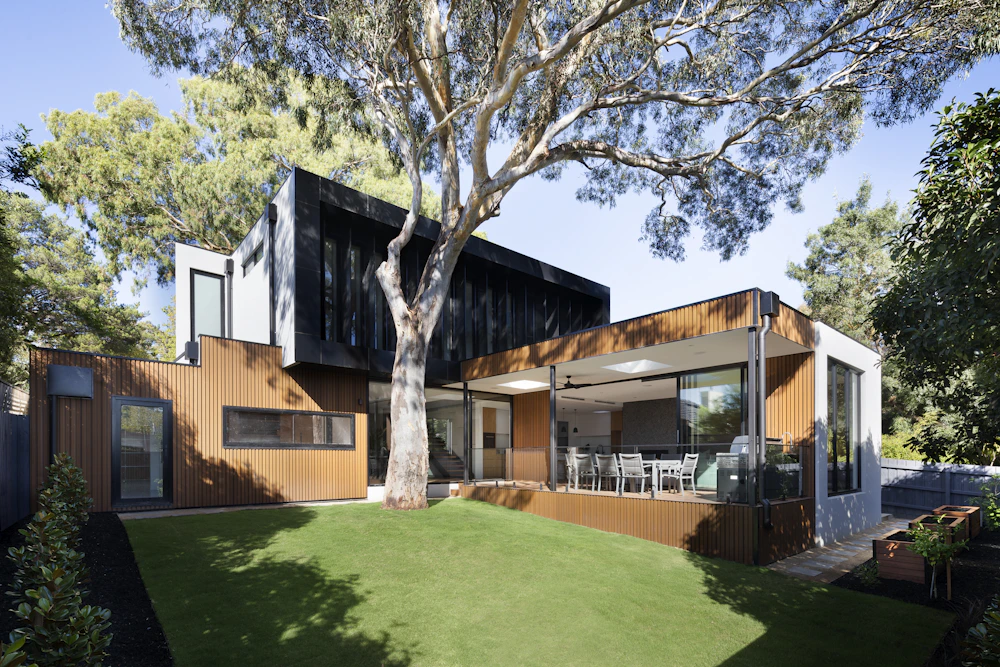
Imagine two three-storey terrace houses with almost identical layouts.
In the first, a couple lives alone and frequently travels for work. Their priorities might include remote monitoring, convenient lighting controls and managing selected home functions while away.
In the second, a multigenerational family lives together, with young children, elderly parents and a pet.
Their priorities may be very different.
They might benefit from accessible controls, carefully chosen safety features and automation that doesn't interfere with the routines of multiple occupants.
Even though the properties look similar, installing exactly the same smart home arrangement in both would overlook important differences.
This is why there is no single ideal smart home package for every landed property.
The right solution depends on the home's layout, existing equipment, household composition and everyday habits.
It also depends on the homeowner's preferences.
Some people love automation. Others want technology that remains discreet and gives them straightforward manual control.
Neither approach is inherently better.
The purpose of a smart home is to support the way you want to live.
Choosing a Smart Home Specialist: Look Beyond the Product List
When comparing smart home companies in Singapore, it's easy to focus on the devices, brands and features being offered.
Those details matter, but they don't tell the whole story.
A more useful question is whether the company takes time to understand your home and the people living in it.
Do they ask about your daily routines?
Do they consider children, elderly family members or pets?
Can they explain why a particular feature is suitable for your property, rather than simply recommending more equipment?
Are they willing to explain the limitations of a product when another solution may be more practical?
These conversations can be just as important as the technology itself.
For landed properties, the proposed system should also fit the renovation and interior design plans. Smart home requirements may need to be communicated to the homeowner's appointed interior designer, electrical contractor and carpenter so the selected equipment can be integrated appropriately.
Electrical works should remain with the relevant qualified electrical professionals.
A thoughtful smart home specialist helps homeowners understand their options and make decisions that balance convenience, reliability, safety and appearance.
A Home That Understands How You Live
There isn't one perfect formula for creating a smart home.
A young family, a multigenerational household and a couple living in a three-storey terrace house may all benefit from completely different features.
The most important thing is to be clear about what you want your home to do for you.
Consider the routines you follow, the people you share your space with and the small everyday inconveniences you would like to eliminate.
Then choose technology that supports those needs.
At Lumisync, our approach is centred on understanding the homeowner before recommending a solution. We focus on professional smart home integration, helping clients choose suitable features and coordinating relevant requirements with their appointed renovation professionals.
Rather than simply supplying individual devices, our aim is to deliver thoughtfully planned smart home solutions that make everyday living easier and more comfortable.
Because the best smart home isn't the one that does everything.
It's the one that does the right things for you.
If you're exploring smart home solutions for your terrace house, semi-detached home or bungalow in Singapore, discover how Lumisync can help you plan a home that fits your lifestyle.
